Challenge
The problem
MunchRun connects customers with 1,800+ local restaurants, but the app had grown organically for three years. Inconsistent patterns and no real-time feedback pushed cart abandonment to 54% and the App Store rating down to 3.1 stars.
The goal was to rebuild the ordering experience, from discovery to post-delivery review, with a focus on speed, clarity, and delight.
Key pain points
62% of drop-offs happened at the item customization step
Placing a single order took 6.8 minutes on average
45% of support tickets were about order tracking
Repeat orders fell from 61% to 44% in eight months
The problem
MunchRun connects customers with 1,800+ local restaurants, but the app had grown organically for three years. Inconsistent patterns and no real-time feedback pushed cart abandonment to 54% and the App Store rating down to 3.1 stars.
The goal was to rebuild the ordering experience, from discovery to post-delivery review, with a focus on speed, clarity, and delight.
Key pain points
62% of drop-offs happened at the item customization step
Placing a single order took 6.8 minutes on average
45% of support tickets were about order tracking
Repeat orders fell from 61% to 44% in eight months
Process
Discovery & Research
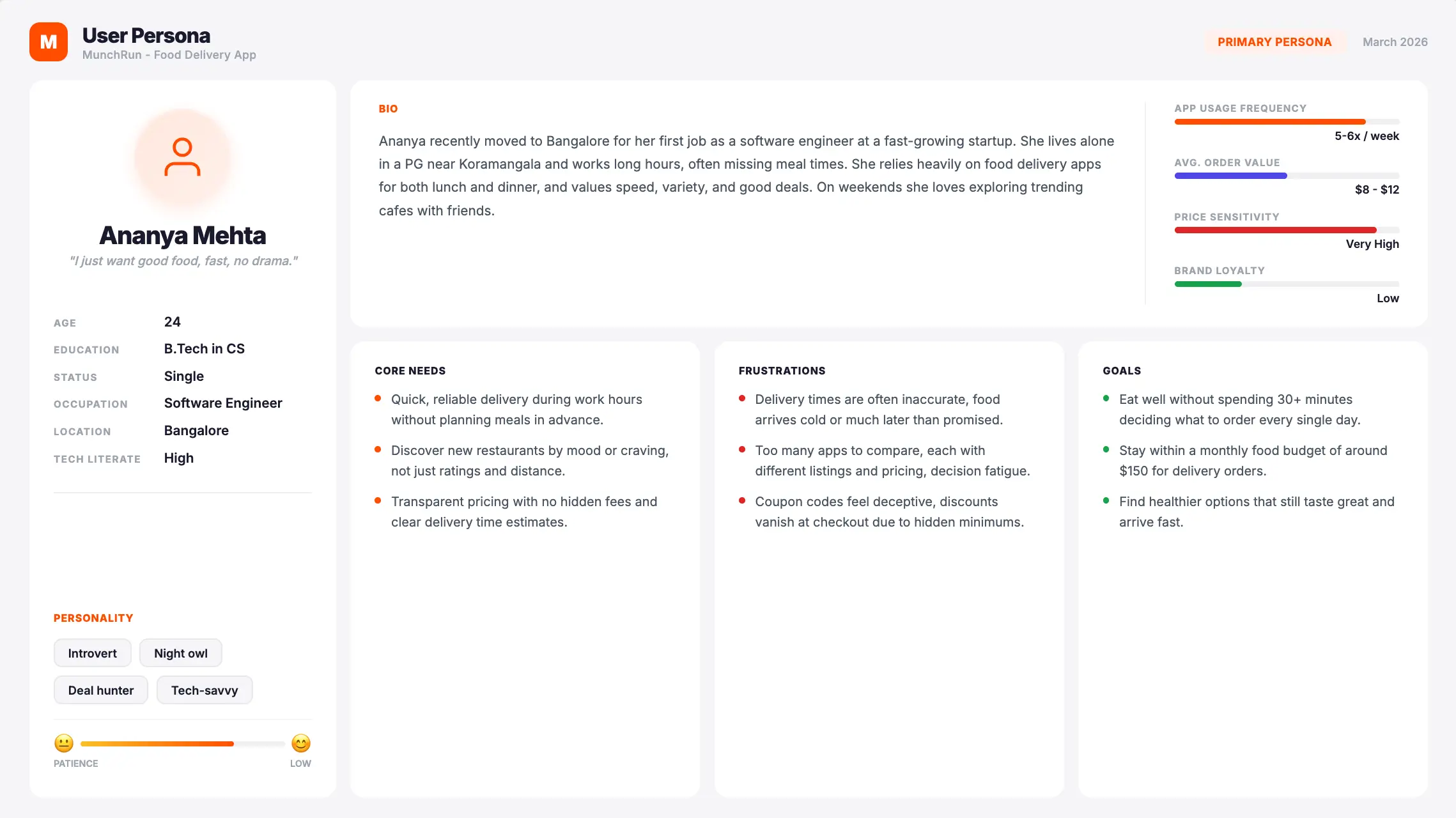
I ran a 3-week discovery phase combining in-app analytics, 18 user interviews, 3,200 session recordings, and a competitive audit of 6 major delivery platforms.
Key findings
74% of users found the customization screen overwhelming.
Users expected live tracking but only saw static ETAs.
Repeat customers wanted a faster way to reorder.
Discovery lacked useful filters for new users.

Ideation & Information Architecture
I ran a 2-day design sprint with product and engineering. Using how-might-we questions, affinity mapping, and storyboarding, we generated 90+ concepts and narrowed them to two directions.
We chose QuickFlow, a concept that reduces decision fatigue with smart defaults, saved preferences, and one-tap reorder at every touchpoint.
User Journey Mapping
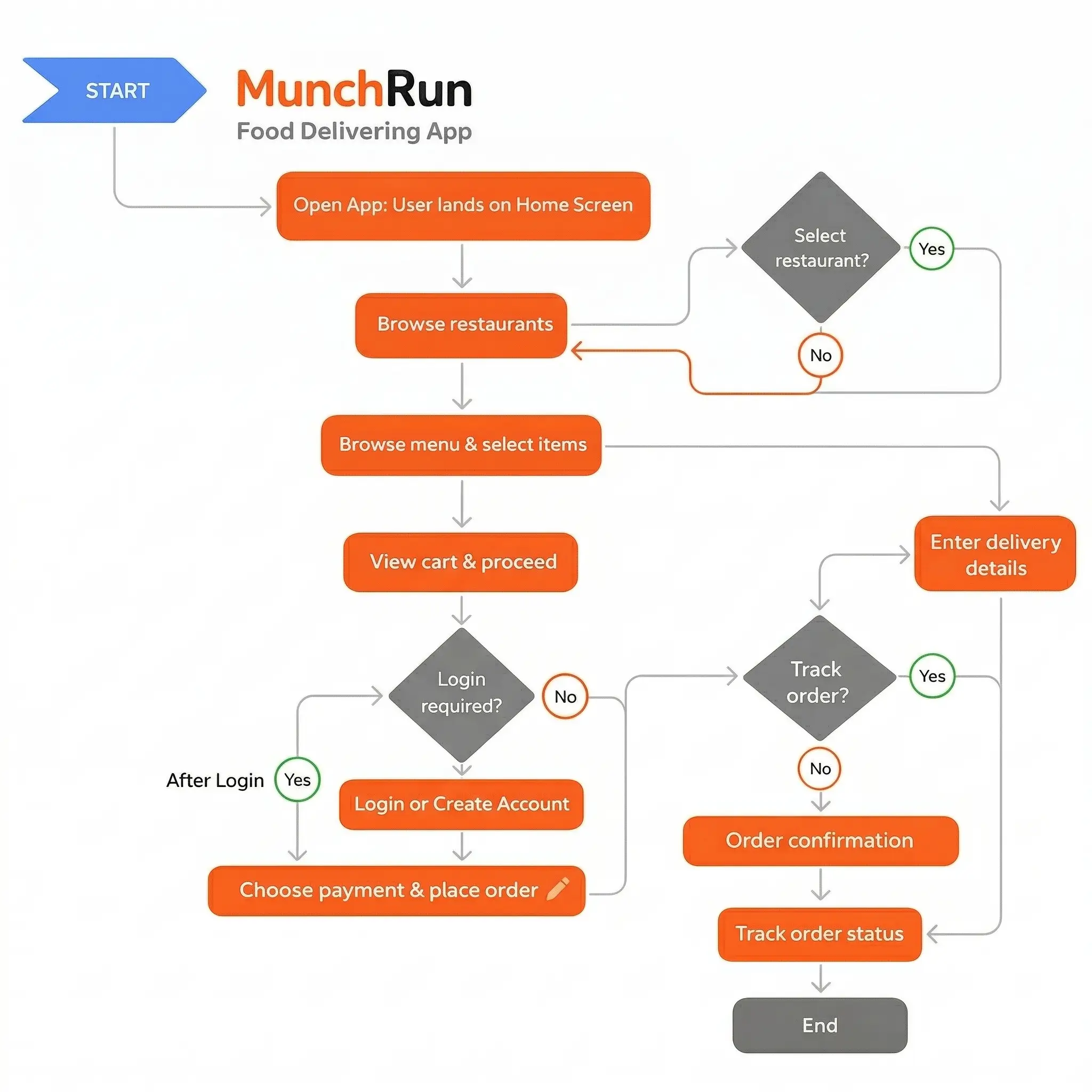
I mapped three primary journeys: new user discovery, repeat order, and live order tracking. The target was cutting average order time from 6.8 minutes to under 3.
Key journey
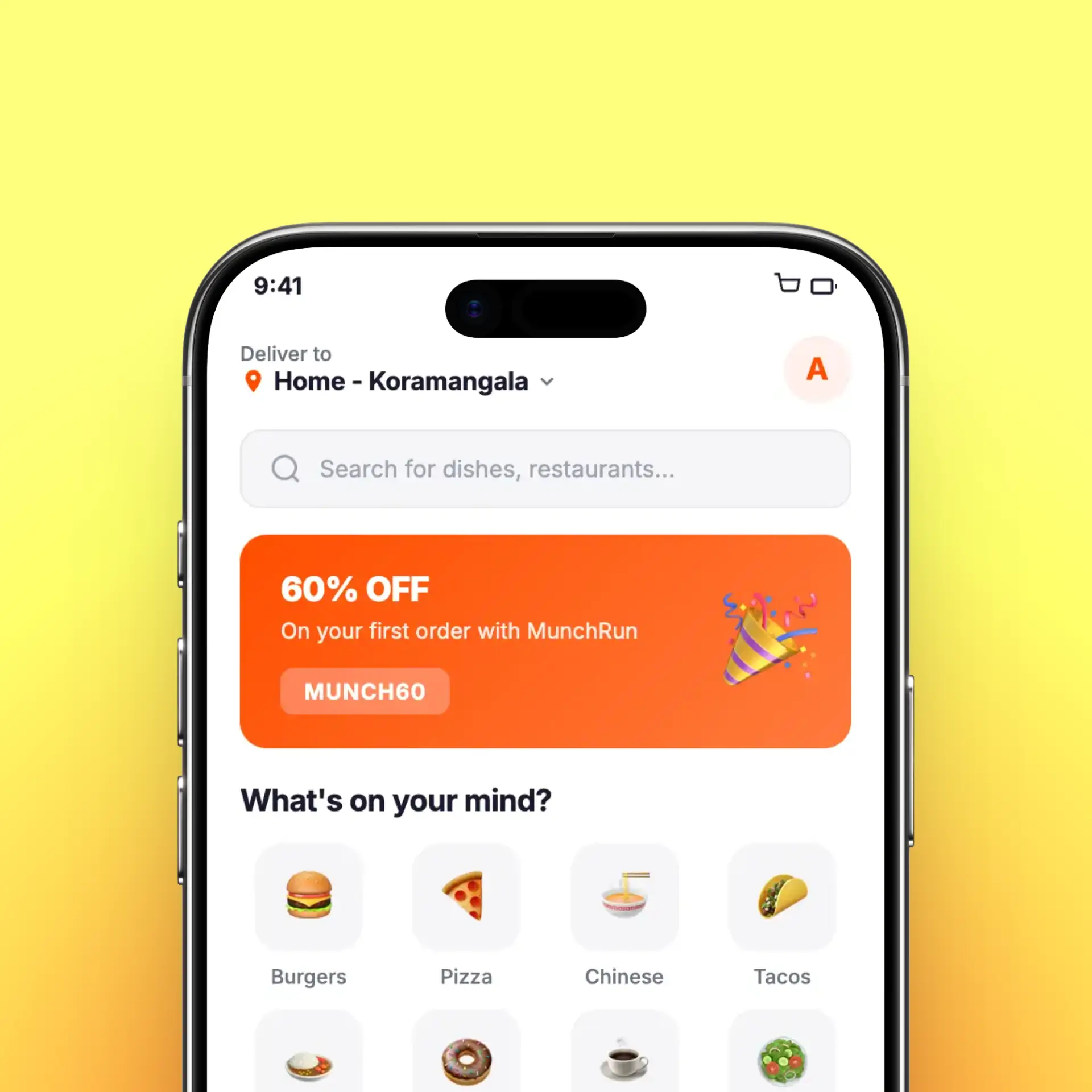
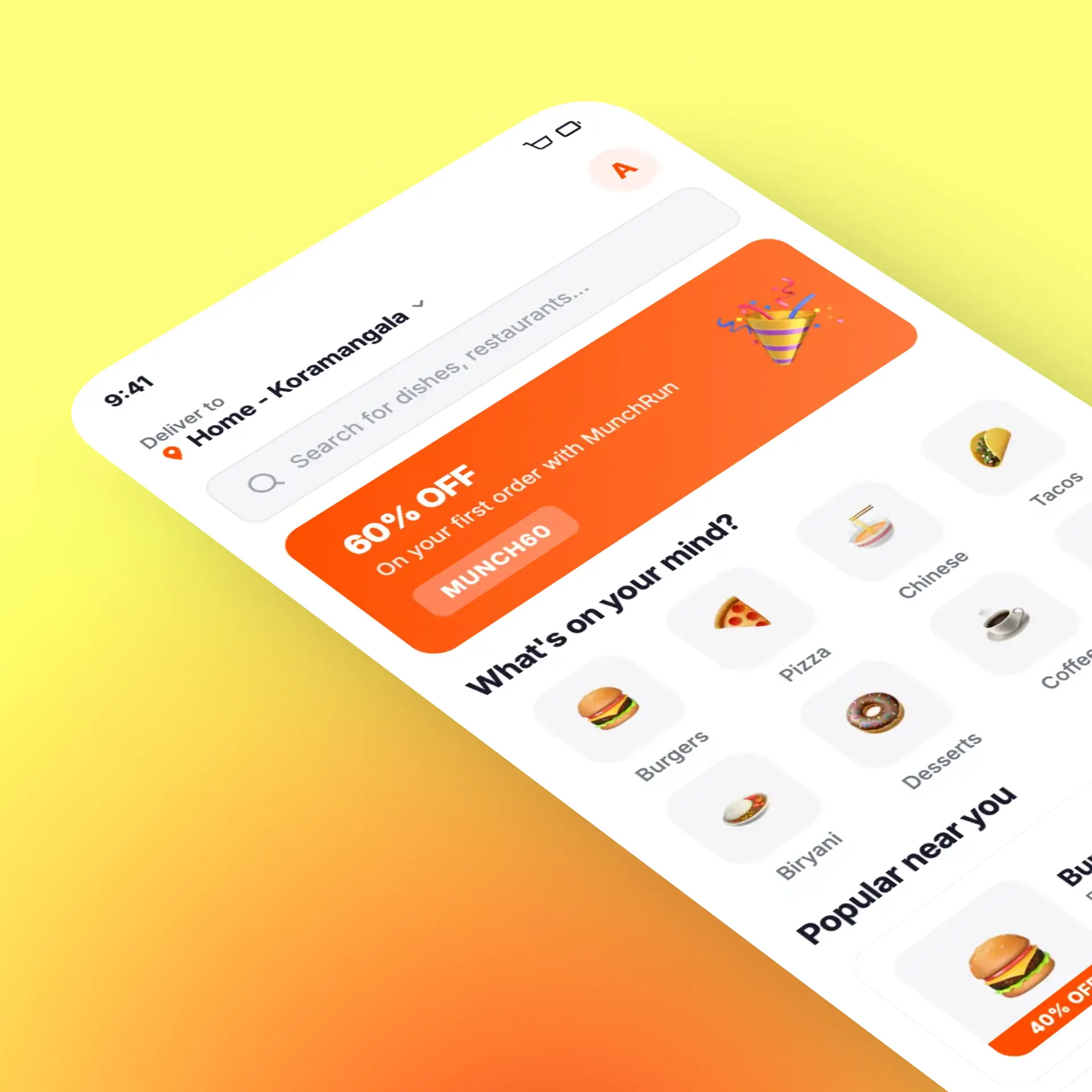
Discover restaurants through a personalized feed with live wait times.
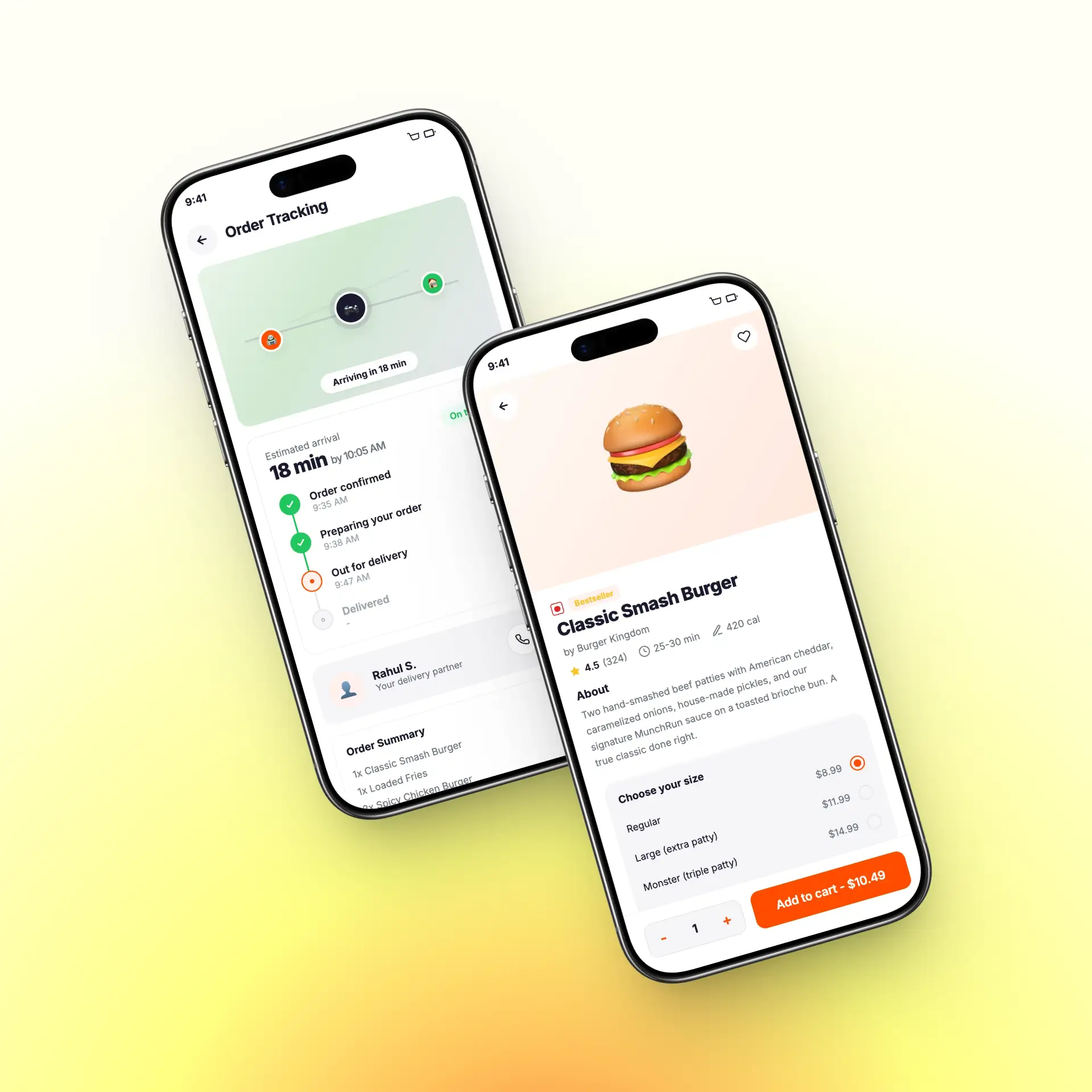
Customize items on a single screen with saved preferences.
Check out with inline upsells and remembered details.
Track the order on a live map with an arrival countdown.
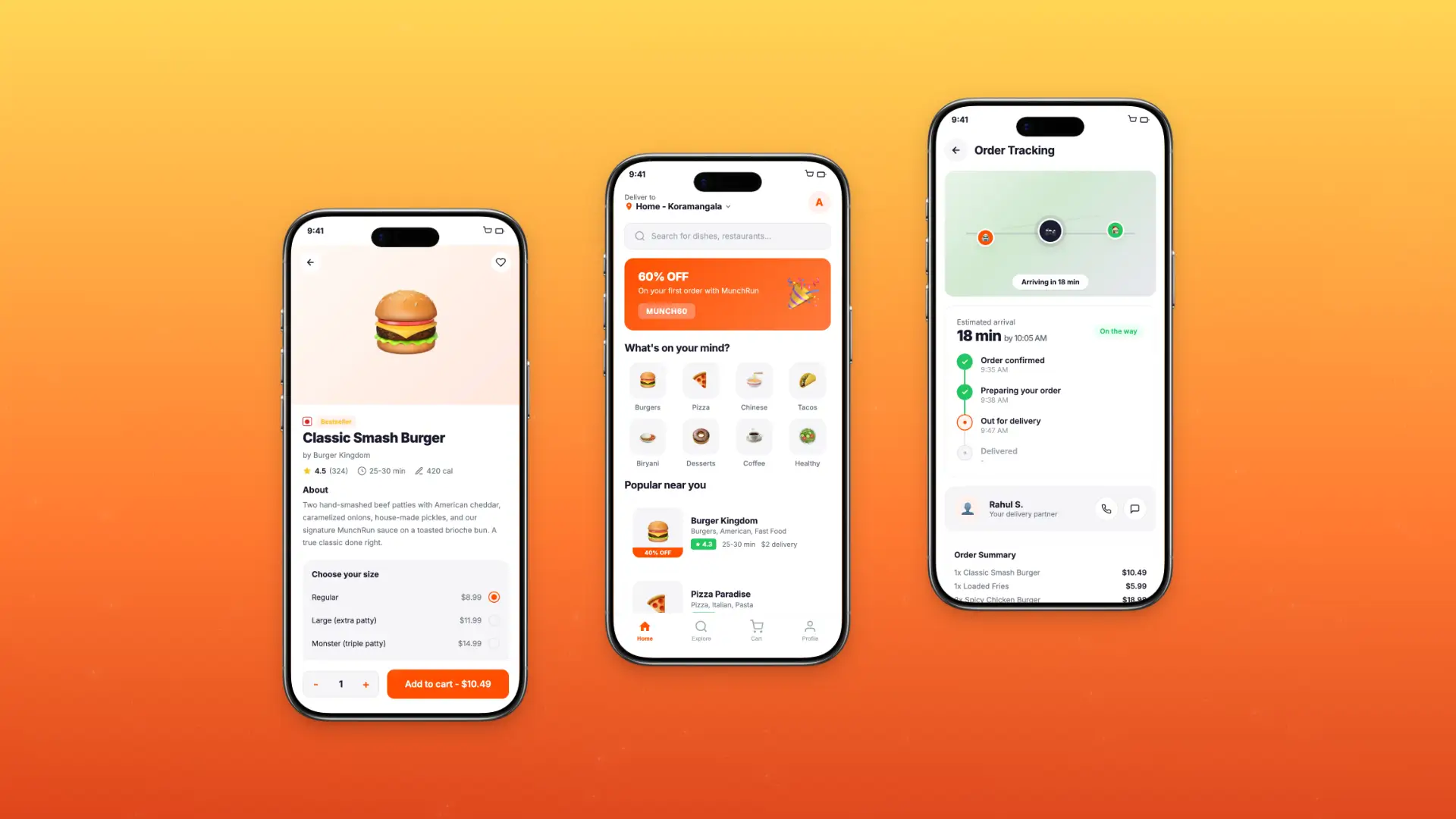
This journey shaped the home feed, the item builder, and the tracking screen.
Wireframing & Prototyping
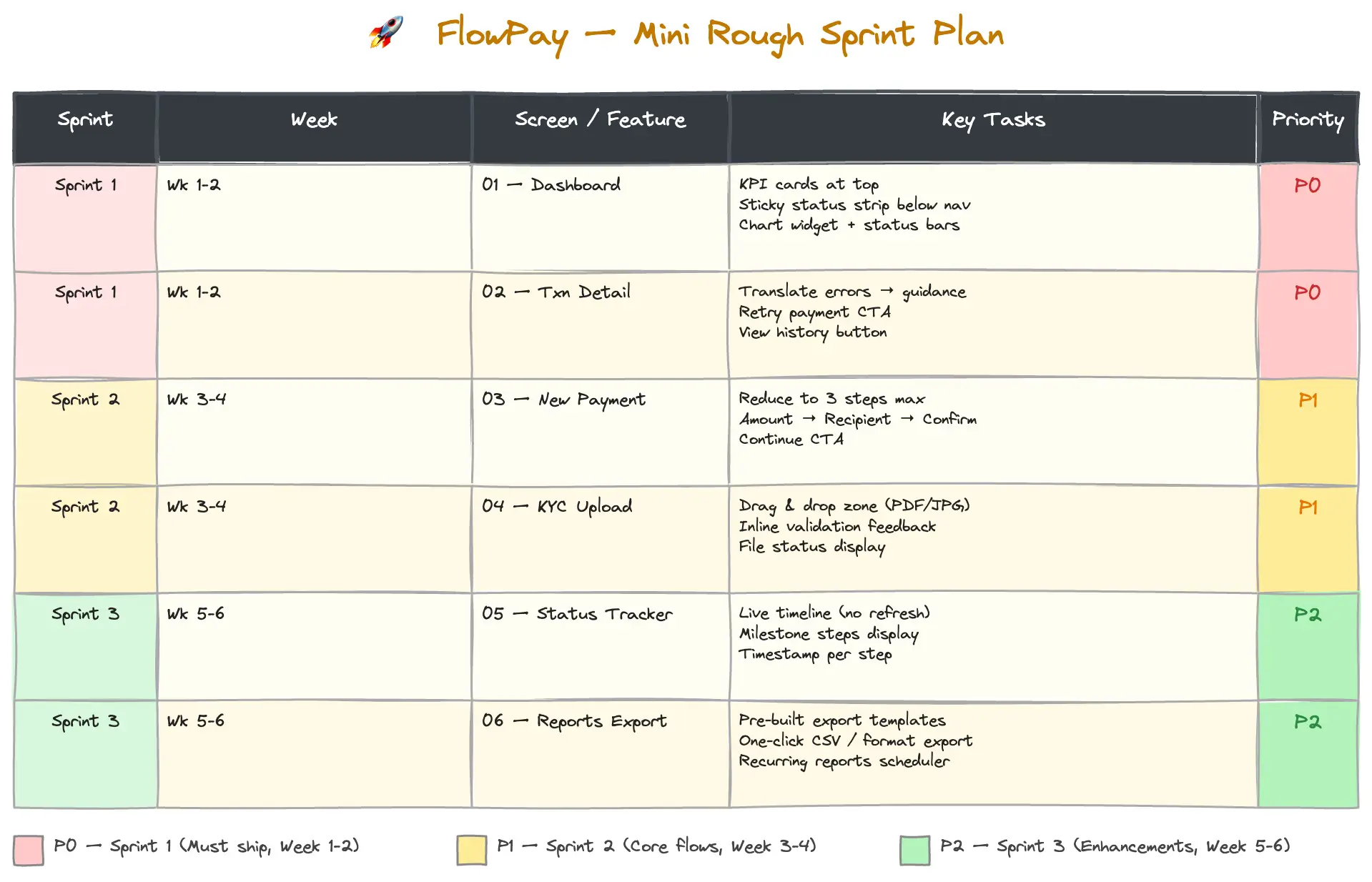
I designed wireframes for 22 key screens across 3 iterations, then built a high-fidelity Figma prototype and tested it with 28 participants over 4 rounds.
Collapsing the 4-step customization into one bottom sheet cut time on screen by 28%, and a persistent Reorder shortcut lifted repeat orders by 40% in beta. The final wireframes reached an 88% task completion rate, up from 51%.

Discovery & Research
I ran a 3-week discovery phase combining in-app analytics, 18 user interviews, 3,200 session recordings, and a competitive audit of 6 major delivery platforms.
Key findings
74% of users found the customization screen overwhelming.
Users expected live tracking but only saw static ETAs.
Repeat customers wanted a faster way to reorder.
Discovery lacked useful filters for new users.
Ideation & Information Architecture
I ran a 2-day design sprint with product and engineering. Using how-might-we questions, affinity mapping, and storyboarding, we generated 90+ concepts and narrowed them to two directions.
We chose QuickFlow, a concept that reduces decision fatigue with smart defaults, saved preferences, and one-tap reorder at every touchpoint.
User Journey Mapping
I mapped three primary journeys: new user discovery, repeat order, and live order tracking. The target was cutting average order time from 6.8 minutes to under 3.
Key journey
Discover restaurants through a personalized feed with live wait times.
Customize items on a single screen with saved preferences.
Check out with inline upsells and remembered details.
Track the order on a live map with an arrival countdown.
This journey shaped the home feed, the item builder, and the tracking screen.
Wireframing & Prototyping
I designed wireframes for 22 key screens across 3 iterations, then built a high-fidelity Figma prototype and tested it with 28 participants over 4 rounds.
Collapsing the 4-step customization into one bottom sheet cut time on screen by 28%, and a persistent Reorder shortcut lifted repeat orders by 40% in beta. The final wireframes reached an 88% task completion rate, up from 51%.
Outcome
Results
QuickFlow delivers a fast, frictionless ordering experience with a warm saffron and charcoal identity. Cart abandonment dropped by 54%, the App Store rating rose to 4.6, and repeat orders grew by 40%.
Key improvements
One-tap reorder with saved preferences
Single-screen item customization
Live order tracking with map updates
WCAG AA contrast and touch targets